Quick-Step Master Installer
Factory accredited installation
Free measure & quote
Fixed price, no obligation
Supply & install
One point of contact, start to finish
Bayside & South East
Local, family run, fully insured

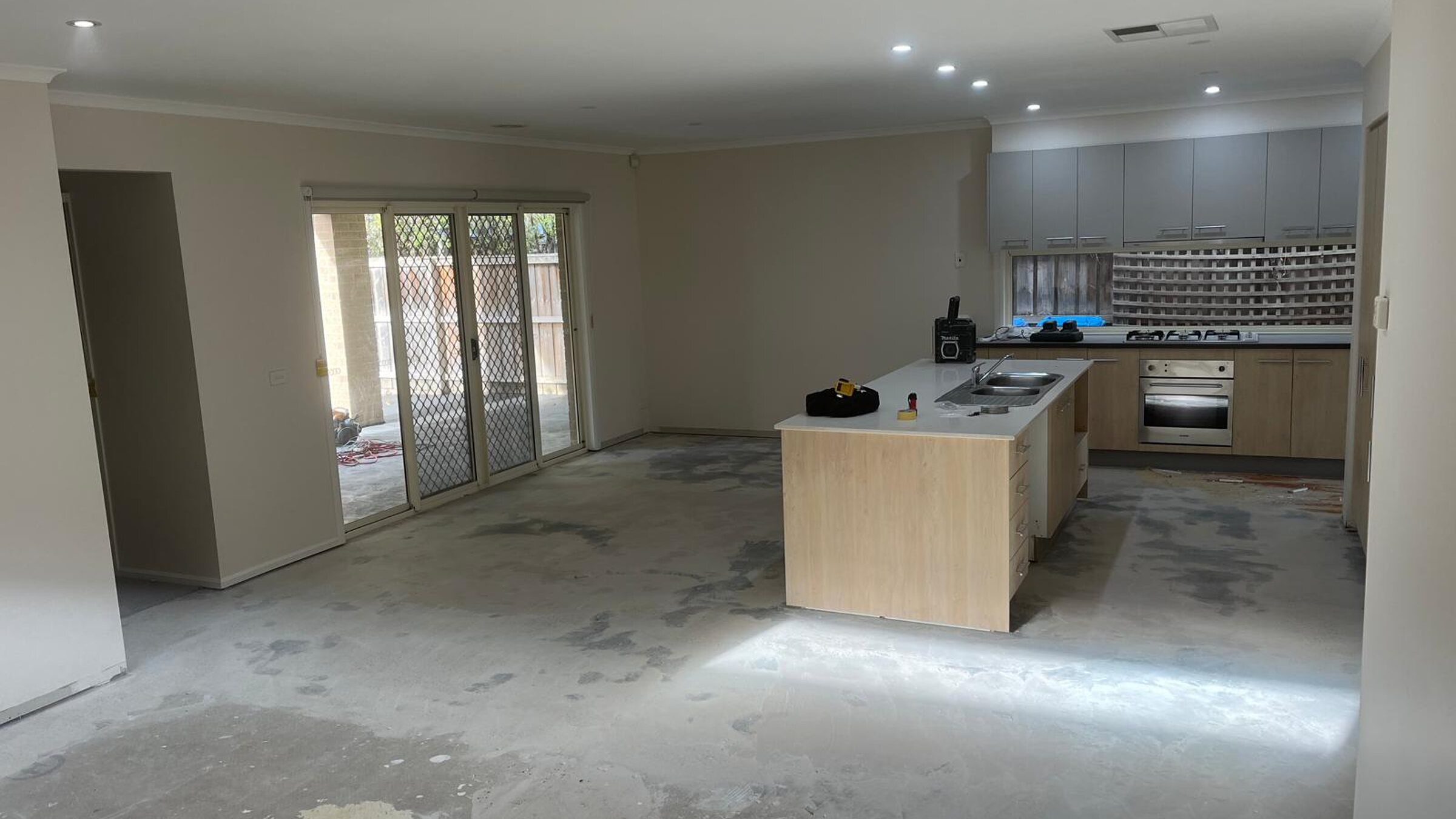
The cheapest insurance in flooring. We test the slab properly, in writing, before a single box of product is ordered.
Quick-Step Master Installer
Factory accredited installation
Free measure & quote
Fixed price, no obligation
Supply & install
One point of contact, start to finish
Bayside & South East
Local, family run, fully insured
Cupped timber. Lifted vinyl. Bubbling glue. Mould under an underlay. A hybrid floor that keeps clicking apart. Chase almost any flooring failure back far enough and you find the same thing. A slab that was still giving off moisture when the floor went down.
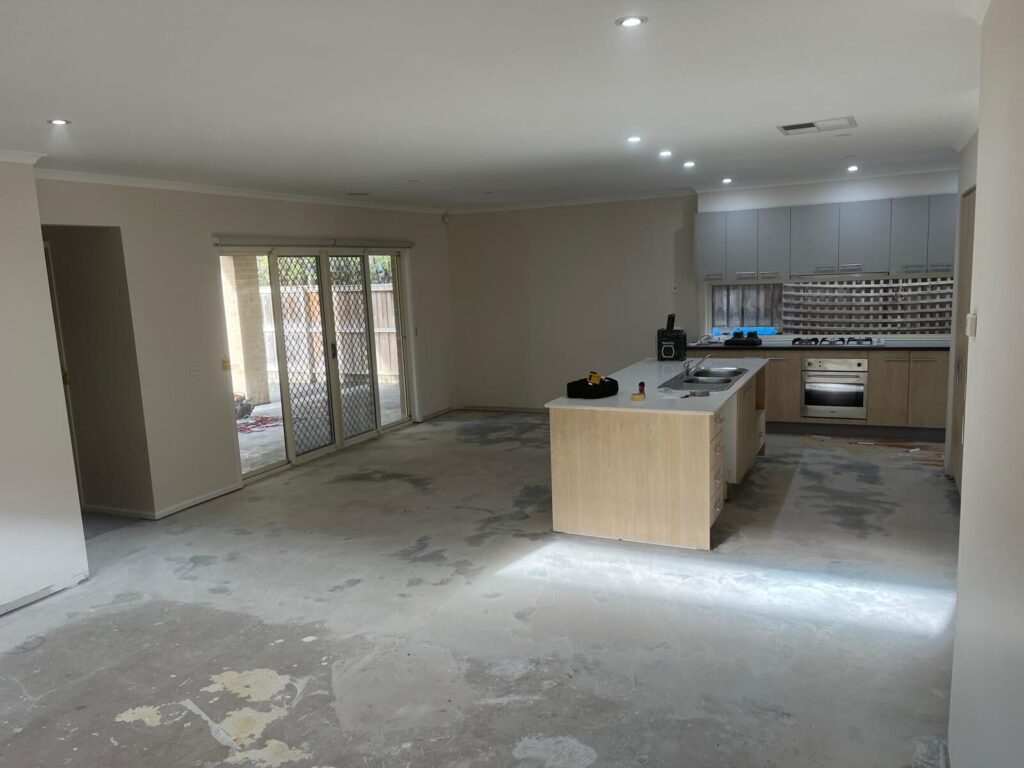
Concrete does not stop drying when it looks dry. A slab needs about one month of drying for every 25mm of thickness, in good conditions. So a standard 100mm slab poured in a Melbourne winter can still be too wet six months later. New builds are the most common problem. So are older slabs with no membrane underneath, ground floor extensions, and homes on a slope where ground water tracks under the house.
Every flooring maker sets a maximum moisture level for their product. Every one of them voids the warranty if the floor goes over a slab above that level. Testing is the only way to know. It costs a fraction of what a failed floor costs to replace.
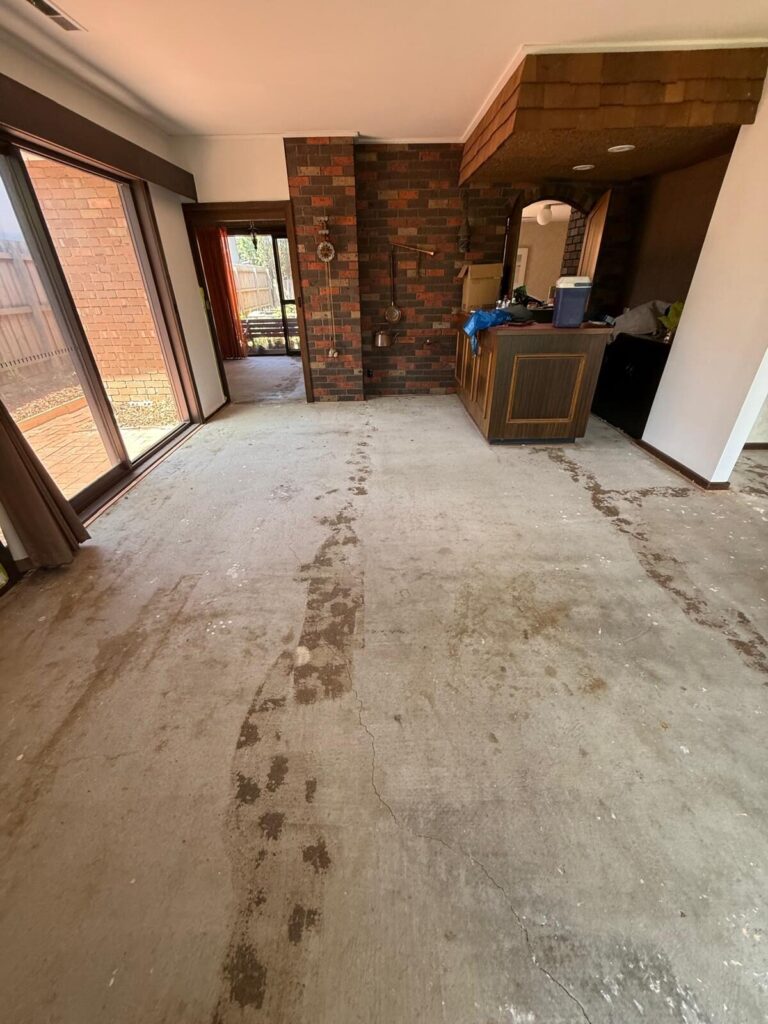
It takes a day or two and it protects tens of thousands of dollars worth of floor.
Almost every flooring warranty requires documented moisture testing. Without it, a claim for cupping, lifting or adhesive failure is very likely to be declined.
A slab near the top of the range can still be fine for a floating floor with a vapour barrier. It can be wrong for direct stick. The test result tells us which.
Far better to know before the product is ordered and the installation booked than on the morning the crew arrives.
You get the readings, the method used and the date. That is exactly what a builder, an insurer or a manufacturer will ask for.
High readings right across a slab often mean a missing or damaged vapour membrane. That is a building problem, and better to know now.
Testing is a small line item. Pulling up and replacing a failed floor across a whole house is not.
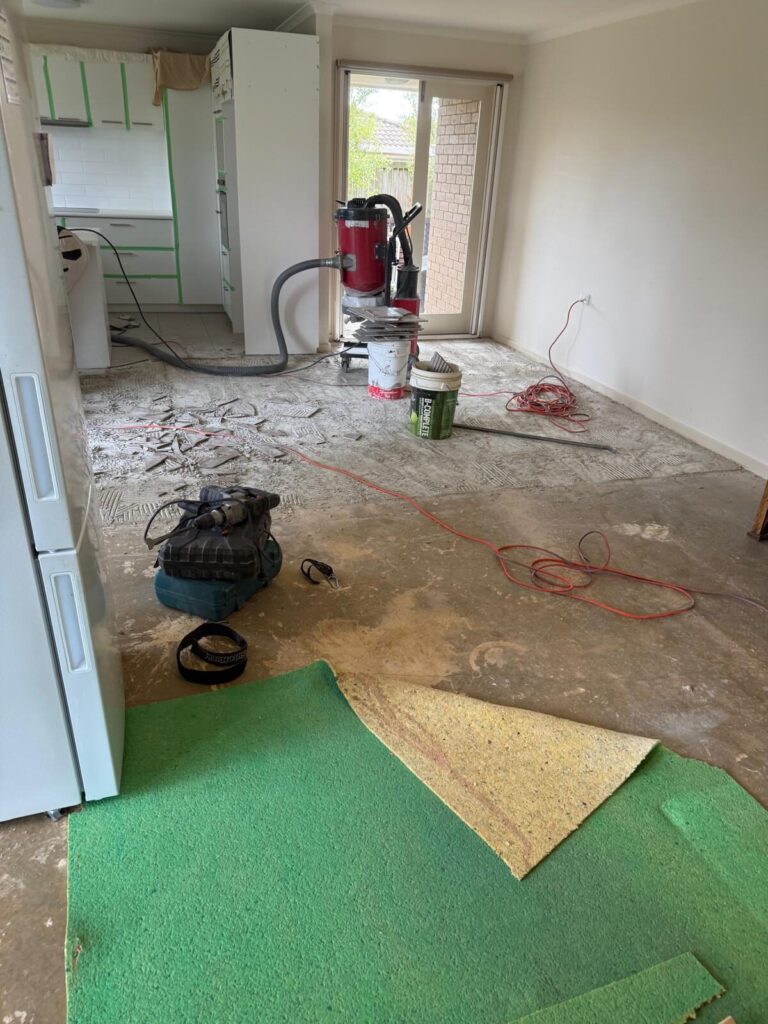
Australian Standard AS 1884 covers moisture testing for resilient floor coverings, and the makers all point to it. The method matters. A quick surface reading can show a slab as dry while the moisture is still sitting deeper in the concrete. Seal that surface with a floor and the moisture comes up.
Depending on the slab, the product and what the manufacturer requires, we use one or more of the following.
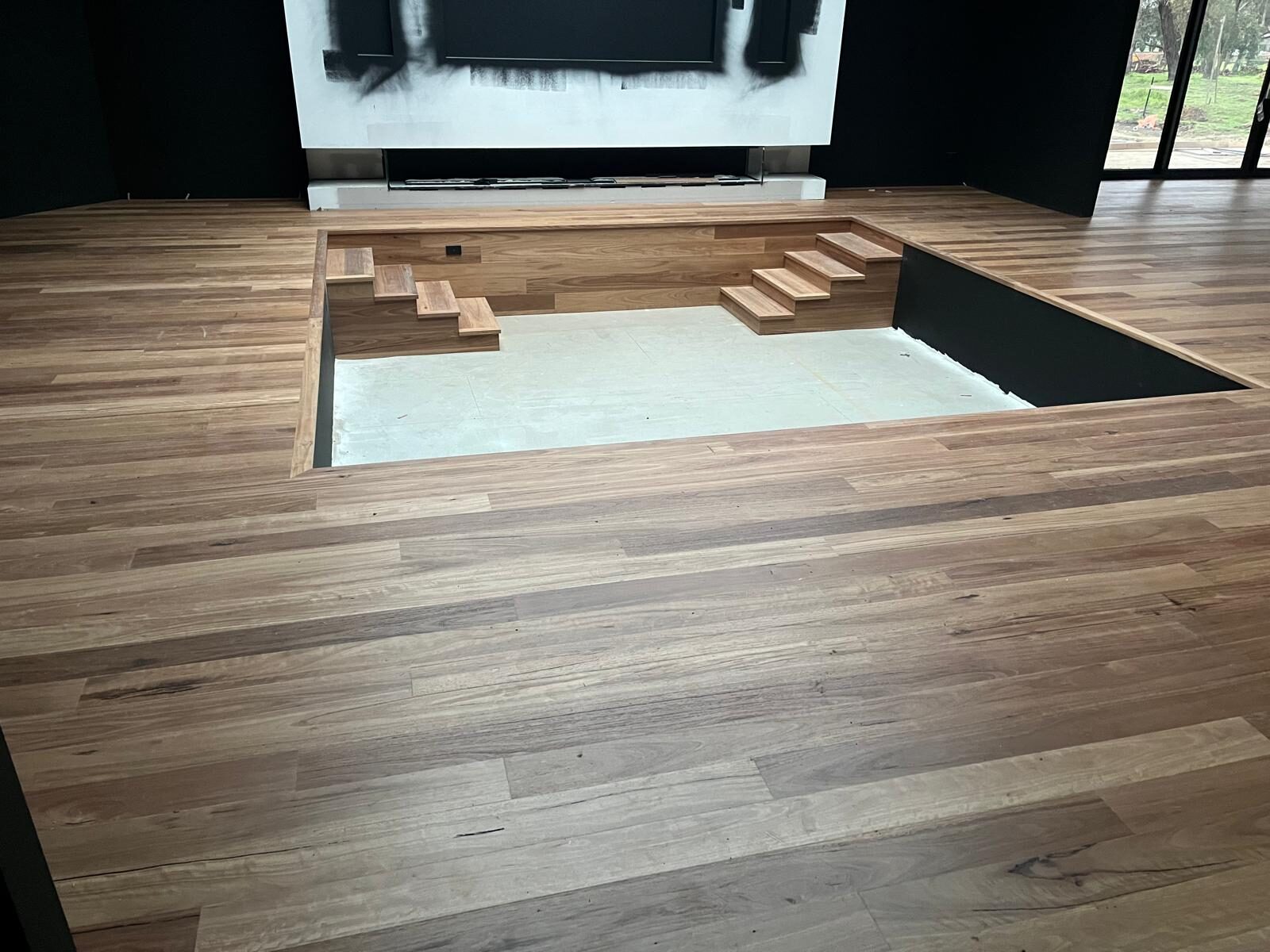
Straightforward, non destructive and usually resolved within a couple of days.
1
Tell us the slab age, the size of the area and the flooring you are thinking about. We will confirm which test method the maker requires.
2
We map the area, then drill probes to the right depth or set surface tests. They stay in place until the readings settle.
3
We return, take the readings and give you a written result with the method, locations and date recorded.
4
A clear next step: proceed, wait, or apply a moisture barrier system. If we are installing the floor, this feeds straight into the quote.

Where we work
Homeowners, builders and businesses, from the Brighton and Bentleigh renovations through to the Cranbourne estates and the Peninsula.
Period homes, renovations and high end rentals close to the bay.
Brighton · Brighton East · Hampton · Hampton East · Sandringham · Black Rock · Beaumaris · Cheltenham · Highett · Mentone · Parkdale · Mordialloc · Bentleigh · Bentleigh East · McKinnon · Ormond · Elsternwick · Caulfield
New builds, house and land, and growing family homes.
Cranbourne · Cranbourne South · Cranbourne East · Botanic Ridge · Clyde · Clyde North · Berwick · Narre Warren · Officer · Pakenham · Beaconsfield · Hampton Park · Lynbrook · Lyndhurst · Endeavour Hills · Hallam
Established homes, rentals and commercial fitouts.
Dandenong · Dandenong North · Keysborough · Noble Park · Springvale · Rowville · Lysterfield · Mulgrave · Wheelers Hill
Coastal properties, holiday homes and investment stock.
Frankston · Frankston South · Langwarrin · Carrum Downs · Skye · Seaford · Mount Eliza · Mornington · Mount Martha · Somerville
Concrete gives off moisture for months after it is poured. Lay a floor over a slab that is still too wet and that moisture gets trapped. It cups timber, lets go of vinyl glue, grows mould under underlay and lifts the joins in floating floors. Testing is the only way to know the slab is ready.
The rule of thumb is one month for every 25mm of slab thickness, in good drying conditions. So a typical 100mm slab needs around four months. Melbourne winters stretch that out. So do closed up buildings with no airflow, and slabs poured over wet ground. It is common for a slab to still be too wet at six months.
It depends on the product. Makers publish their own limits, usually as a maximum relative humidity inside the slab. We check the exact requirement for the floor you are looking at. We do not use a generic number, because the limits differ a lot between timber, vinyl and hybrid.
In situ relative humidity testing involves drilling small holes into the slab for the probes. They are small, they are patched afterwards, and they end up under the new floor. Surface and sheet testing are completely non destructive.
The probes need time to settle before they give a valid reading. That is usually 24 to 72 hours, depending on the method and what the maker requires. So it is one visit to install, then a second visit to read and report.
You have three options. Wait and retest. Apply a surface moisture barrier rated to the reading. Or change the floor to something that copes better, like a floating floor over a vapour barrier. We will tell you which one actually applies to your slab, and what it costs.
Yes. We test and write up the report for builders, owner builders and other trades. It makes no difference whether we are supplying the floor.
Rated 5.0 from 45 Google reviews across Bayside and South East Melbourne.
Tell us the slab age, the area and the flooring you are thinking about. We will confirm the right test method and the price.
Prefer to talk?
Phone 0422 635 797
Email admin@southsideflooring.com.au